
Weather Forecast
National Oceanic and Atmospheric Administration’s Climate Prediction Center produces long-range generalized climate forecasts based on the average of seven different General Circulation Model simulations. These forecasts are released on the 8th day of every month with predictions of temperature and precipitation patterns over North America for the next seven months. The correctness of these forecasts becomes less with lead time. For this reason only three months are shown. The skill of these forecasts are better for temperature compared to precipitation, and are particularly good for temperature during winter and spring when El Niño or La Niña events are occurring. Finally, these forecasts are generally poor during neutral ENSO years (El Niño or La Niña are not occurring).
The predictions for each month describe the anomaly from the 1991 to 2020 average. Prediction maps for temperature and precipitation for the next 3 months are shown below. Also shown is the forecast for the current month from the previous model run release.
Temperature Forecast
For September, the forecast suggests temperatures will be 1.0 to 2.0°C above normal for the Okanagan region, according to NOAA’s Climate Prediction Center.
For the next 3 months, temperatures are forecast to be 1 to 3.0°C above normal for the Okanagan region, with the warmest temperatures occurring in December. These monthly forecasts suggest a warm fall and early winter.
Precipitation Forecast
For September, the forecast suggests precipitation will be below normal according to NOAA’s Climate Prediction Center in the Okanagan.
For the next 2 months, the precipitation forecast for the Okanagan region remains below-normal for October and November. October and November will be drier than September. The December forecast sees precipitation increasing from the previous two months, with coastal British Columbia receiving above-normal precipitation. Combined with above-normal temperatures during these months, this will result in high evapotranspiration and continued soil drying, worsening drought conditions in the Okanagan.
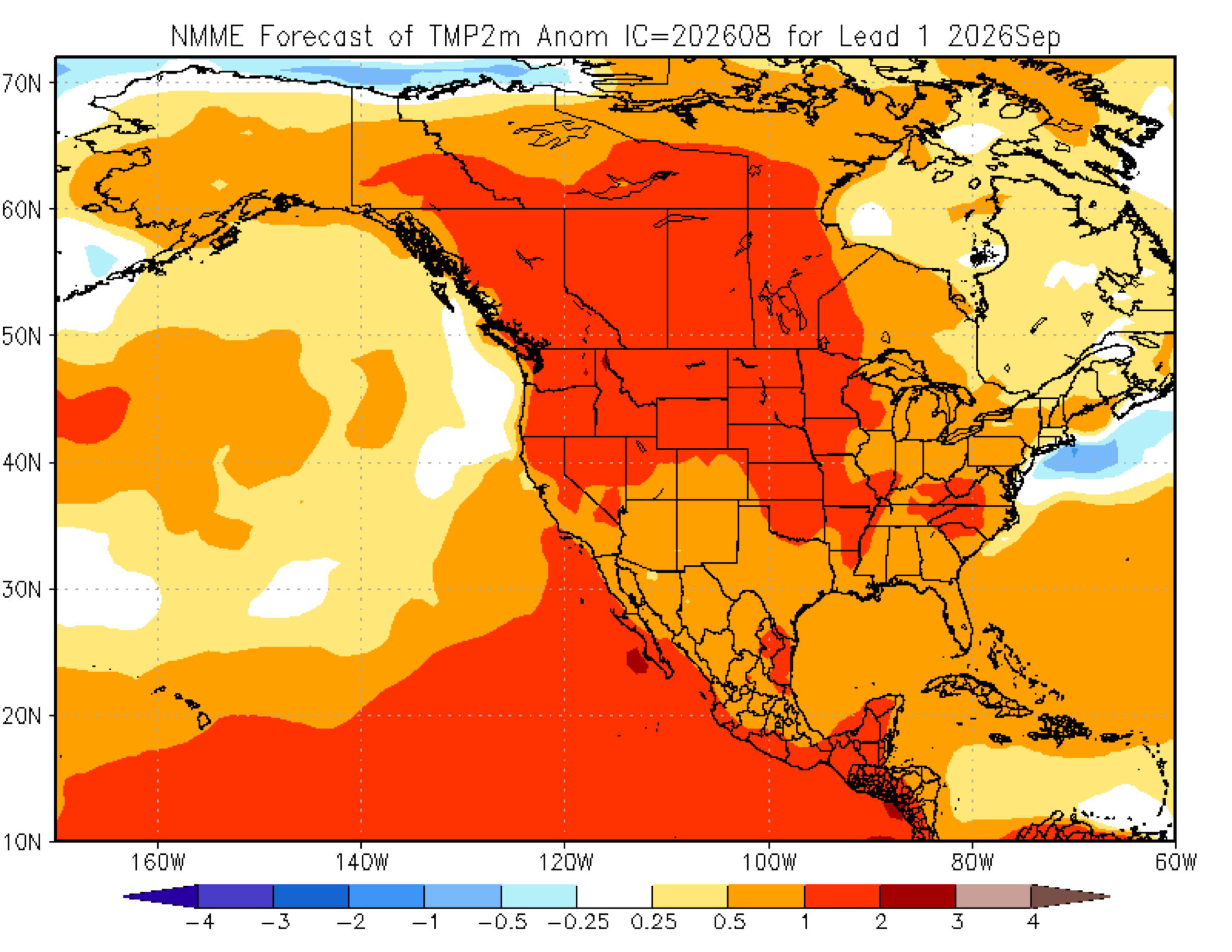
Figure 1 Climate Prediction Center – North American Multi-Model Ensemble temperature forecast for September 2026. August 2026 model run. Shown is the forecasted temperature anomaly relative to the 1991 to 2020 thirty-year average.
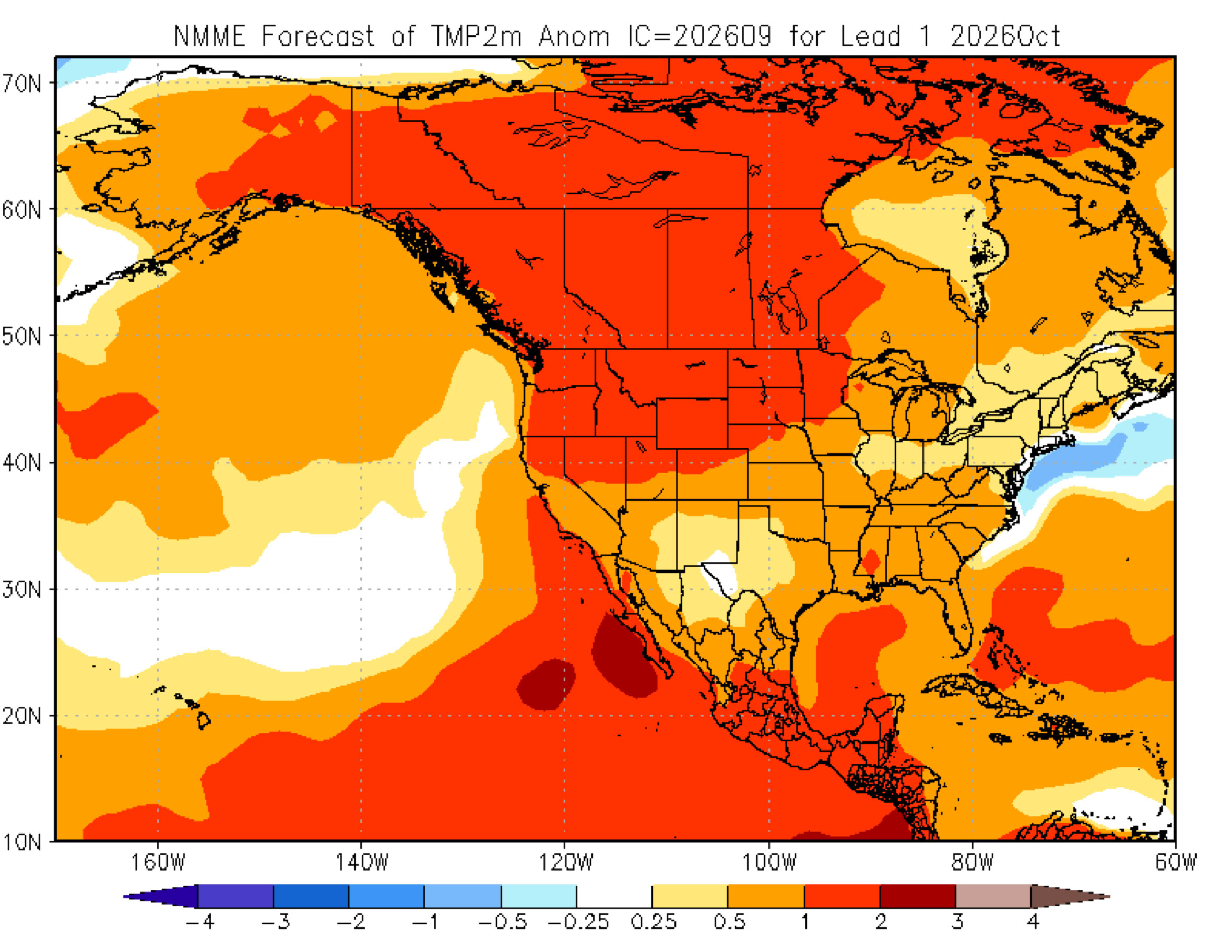
Figure 2 Climate Prediction Center – North American Multi-Model Ensemble temperature forecast for October 2026. September 2026 model run. Shown is the forecasted temperature anomaly relative to the 1991 to 2020 thirty-year average.
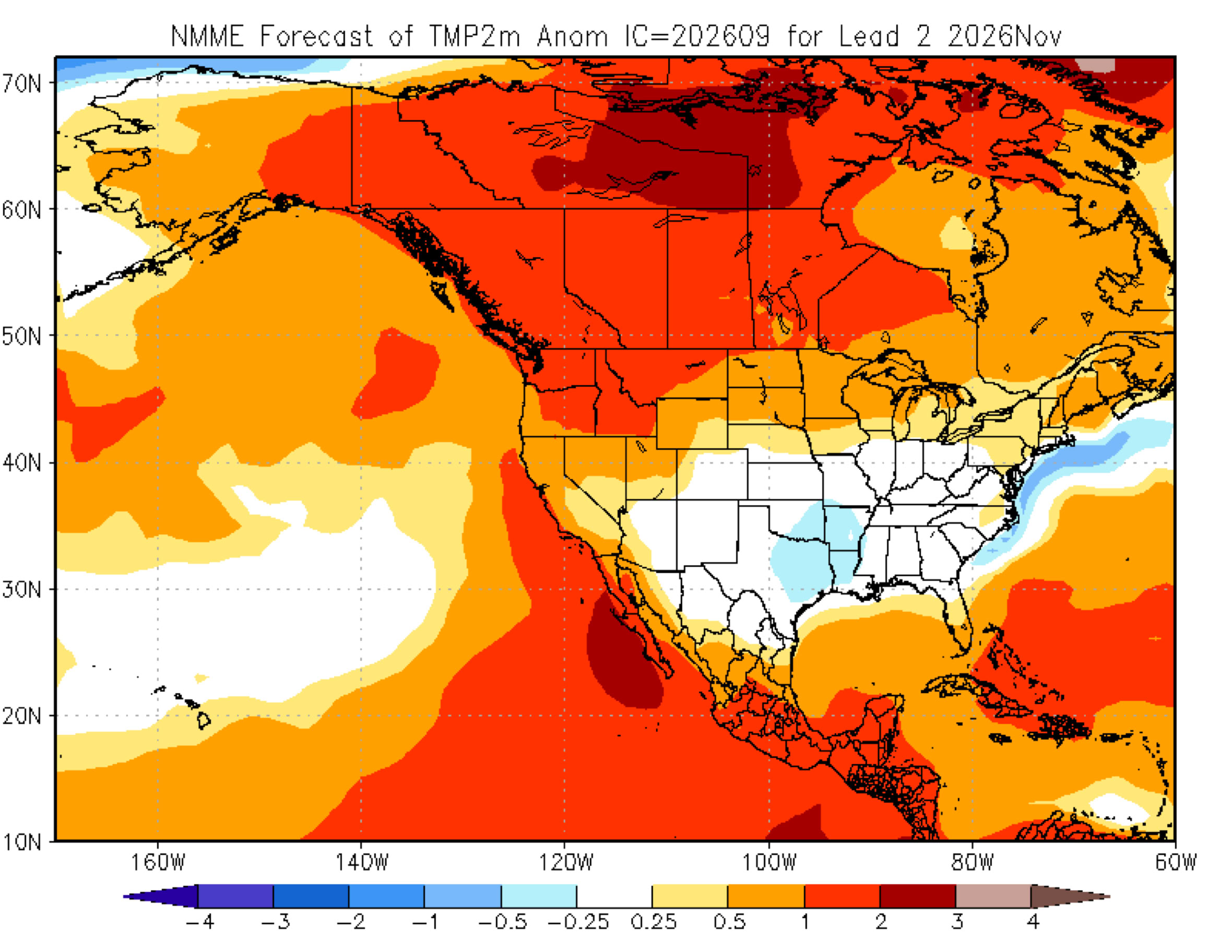
Figure 3 Climate Prediction Center – North American Multi-Model Ensemble temperature forecast for November 2026. September 2026 model run. Shown is the forecasted temperature anomaly relative to the 1991 to 2020 thirty-year average.
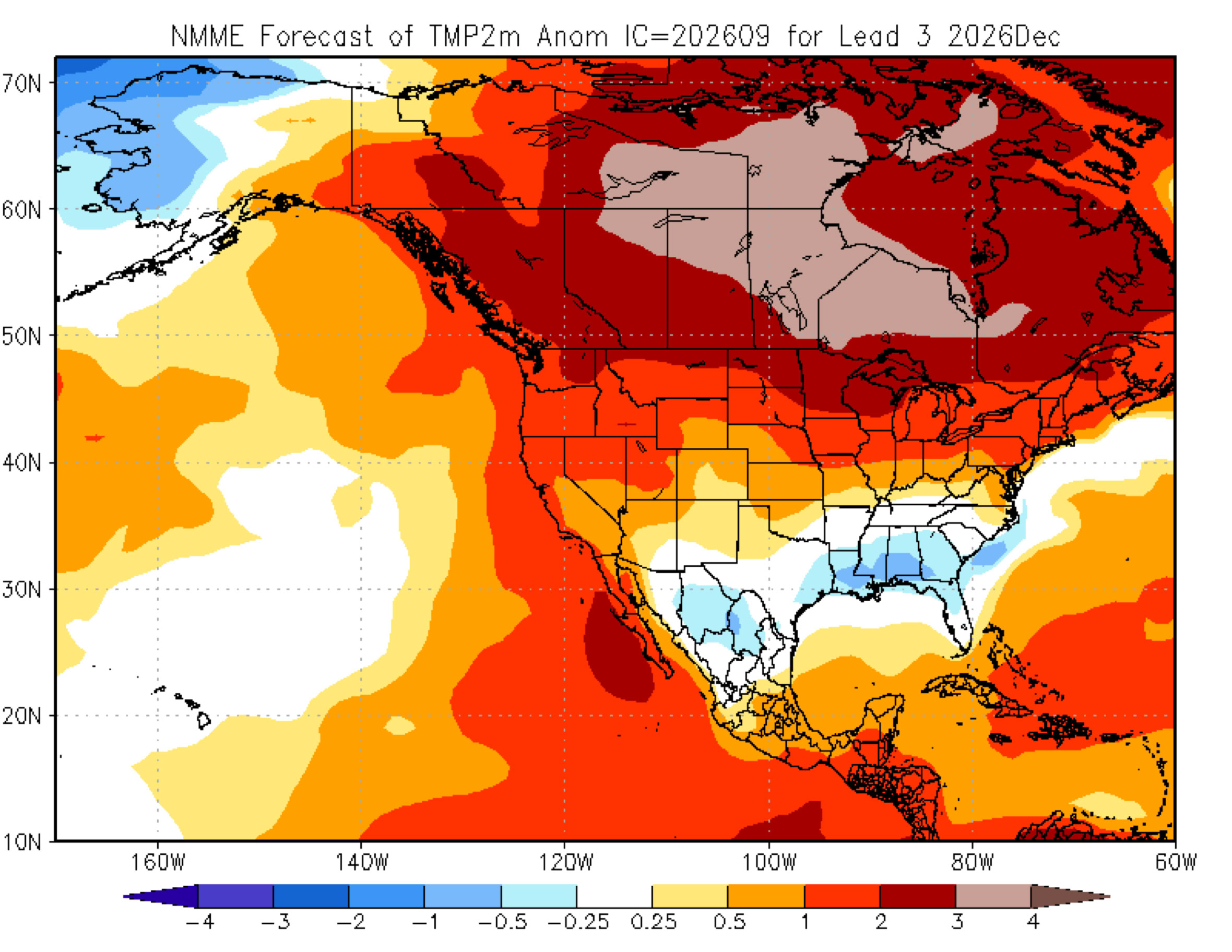
Figure 4 Climate Prediction Center – North American Multi-Model Ensemble temperature forecast for December 2026. September 2026 model run. Shown is the forecasted temperature anomaly relative to the 1991 to 2020 thirty-year average.
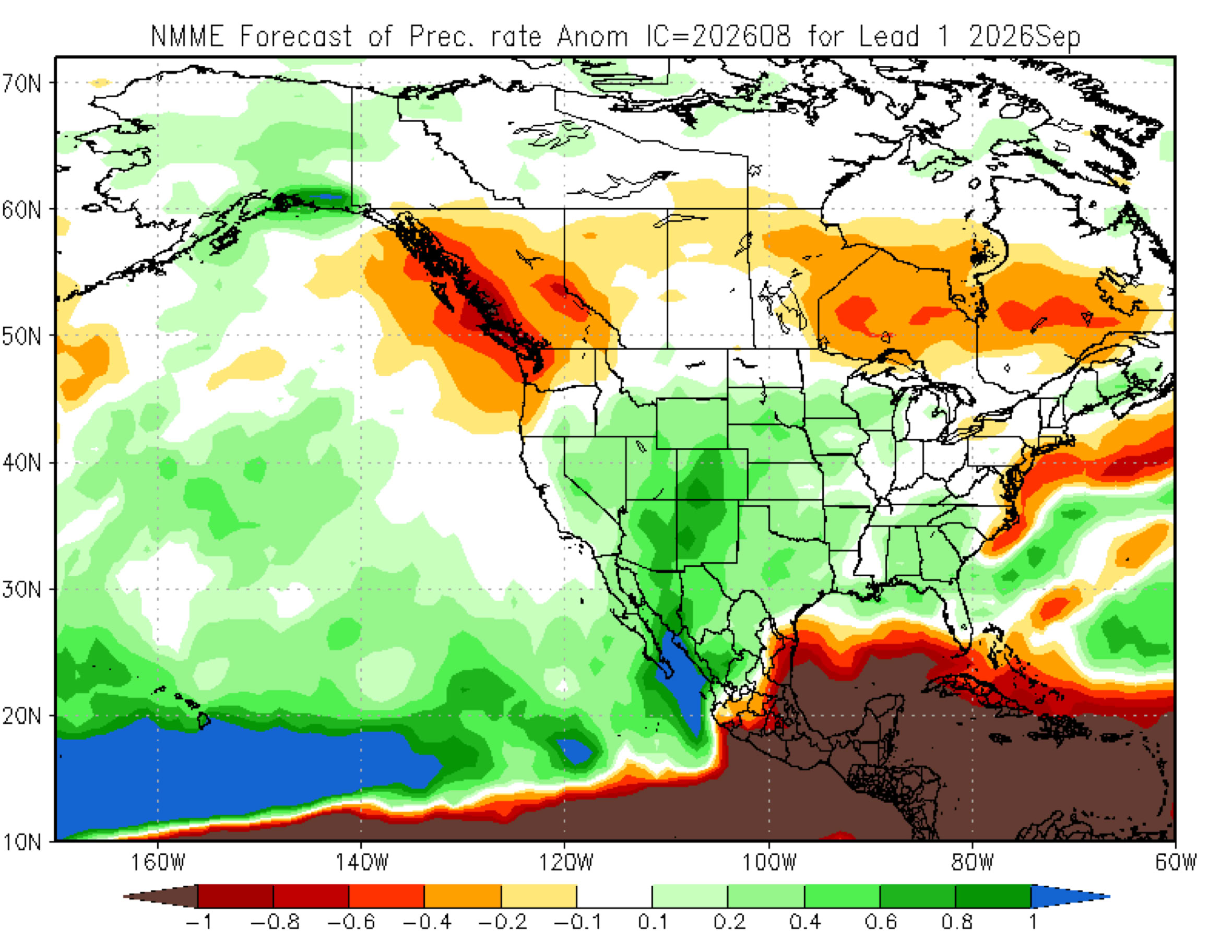
Figure 5 Climate Prediction Center – North American Multi-Model Ensemble precipitation forecast for September 2026. August 2026 model run. Shown is the forecasted precipitation anomaly relative to the 1991 to 2020 thirty-year average.

Figure 6 Climate Prediction Center – North American Multi-Model Ensemble precipitation forecast for October 2026. September 2026 model run. Shown is the forecasted precipitation anomaly relative to the 1991 to 2020 thirty-year average.
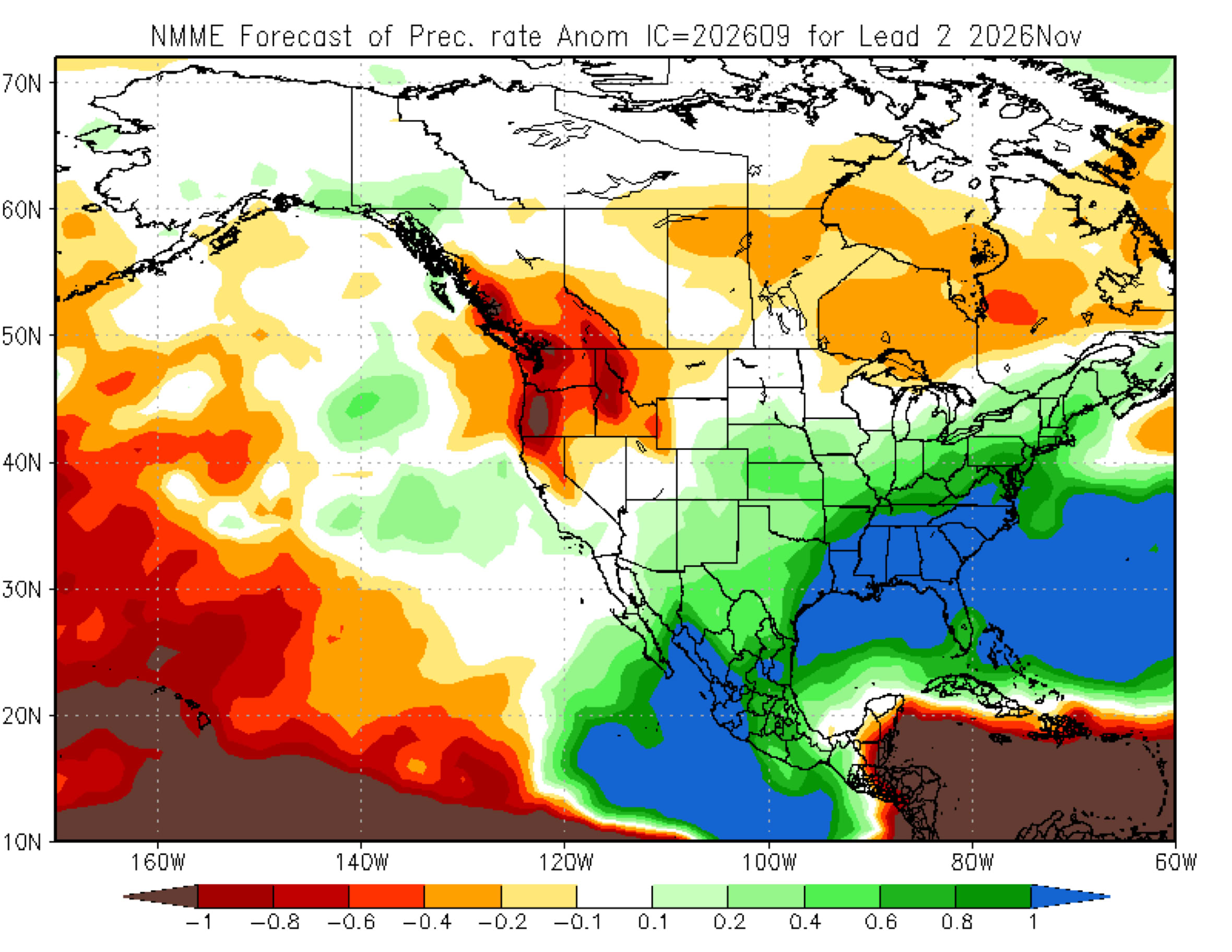
Figure 7 Climate Prediction Center – North American Multi-Model Ensemble precipitation forecast for November 2026. September 2026 model run. Shown is the forecasted precipitation anomaly relative to the 1991 to 2020 thirty-year average.

Figure 8 Climate Prediction Center – North American Multi-Model Ensemble precipitation forecast for December 2026. September 2026 model run. Shown is the forecasted precipitation anomaly relative to the 1991 to 2020 thirty-year average.